
"Automate the invoice approvals." Reasonable request. But here's the work that happens before a single flow gets built.
Map the process as it actually runs
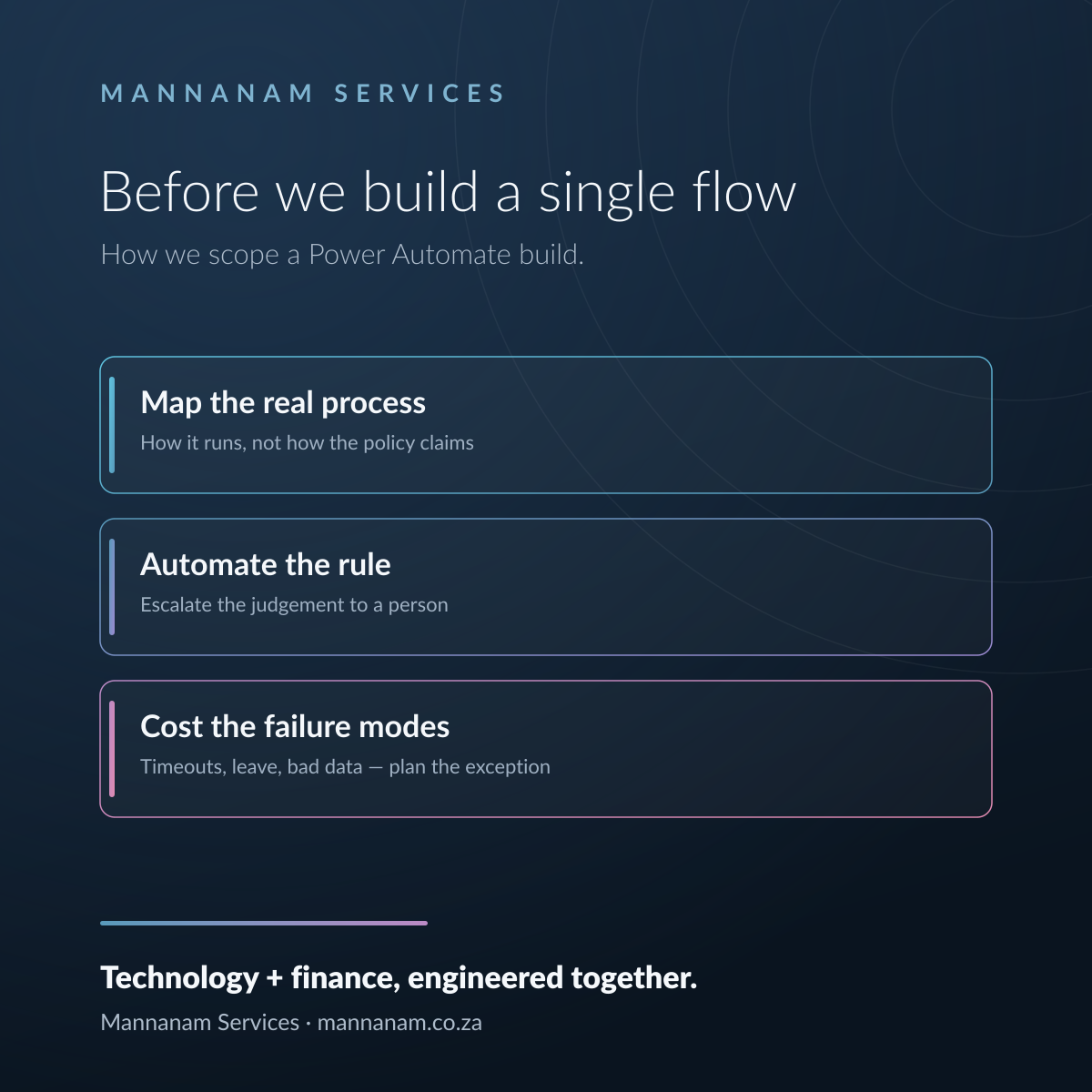
First, we map the process as it actually runs — not as the policy document claims it does. The gap between the two is usually where the automation value sits, and occasionally where we discover there's no process worth automating yet.
Automate the rule, escalate the judgement
Then we draw a hard line. Power Automate is excellent at routing, approvals, data sync, and chasing the things humans forget. It is a poor substitute for a decision that needs a person to own it. Flows that try to automate judgement are the ones that quietly break and erode trust.
Cost the failure modes up front
What happens when the connector times out, the approver is on leave, or the source data is malformed? An automation with no exception path isn't a time-saver — it's a future incident. We cost those failure modes before we build, not after they fire.
Roughly half the requests we get are better solved by fixing the process than by building a flow. Saying so is part of the job. Automation amplifies whatever process you point it at — so point it at a good one.